



Temple
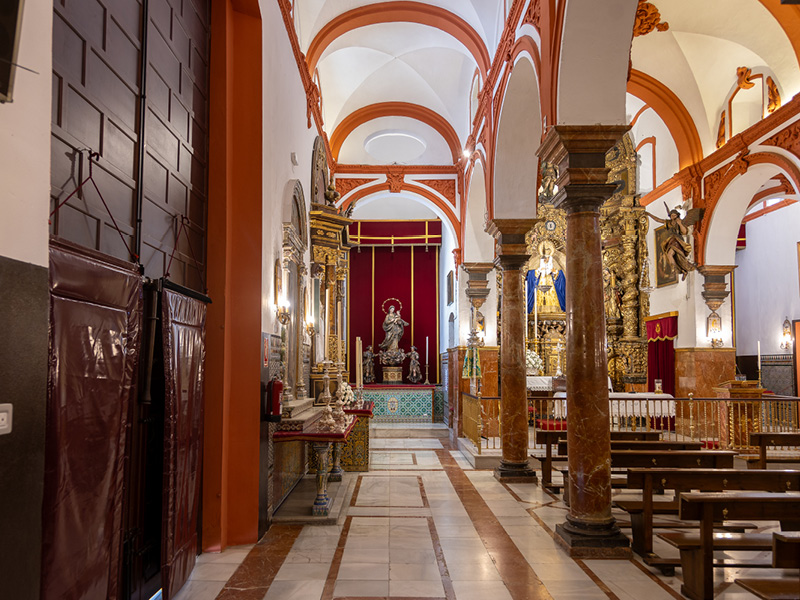
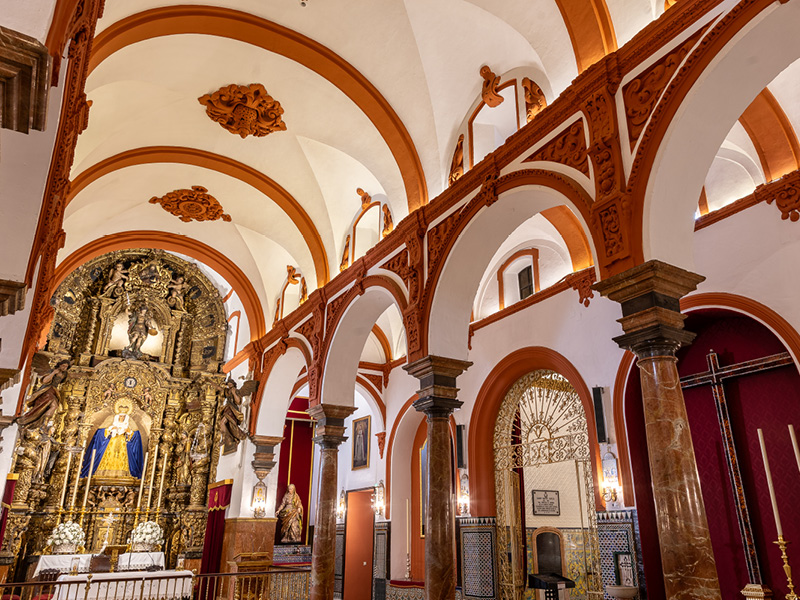
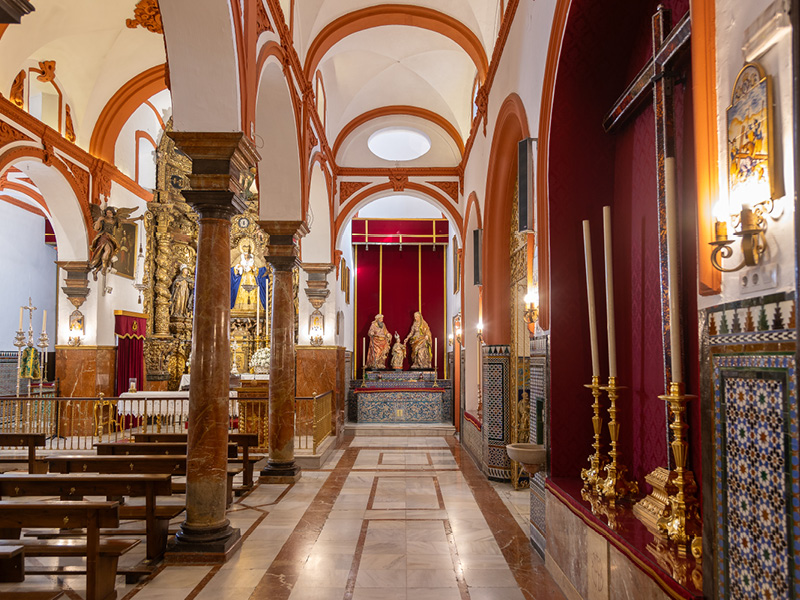
From here you can see the whole of the church. It was built on the site of the old hospital of Saint Brigida, whose chapel was the first canonical seat of the Brotherhood of La O. This old building was in a deplorable state, damaged by the frequent floods of the Guadalquivir and by the earthquake of 9 October 1680. Despite the fact that the years were not favourable for carrying out the work, due to the serious crisis affecting Castile in general and Seville in particular, and knowing in advance that they would not receive any financial support from the Archbishop’s Palace, the Brotherhood of La O decided on 7 May 1697 to construct a new building “at the sole expense of the alms of the brothers and devotees”, the latter even being employed as labourers.
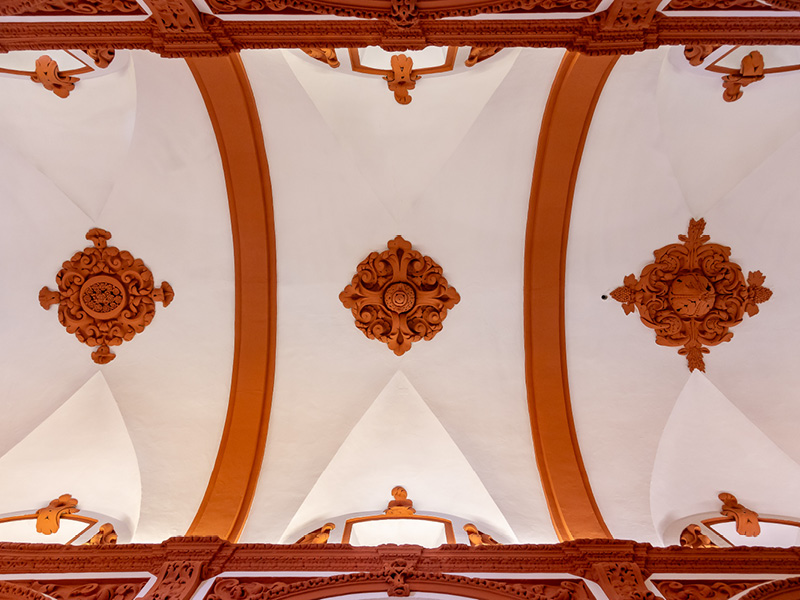
The new church is a building with a hall plan and three naves, almost with the same height, with flat walls. It was inaugurated in February 1702, after the Provisor had granted permission for the blessing and enthronement of the Blessed Sacrament. Solemn ceremonies were held over the next five days, with the participation of the Chapter of the Cathedral, the community of the Dominicans of San Jacinto, the Minims of the Convent of La Victoria, the Augustinians of the Convent of El Pópulo and the Secular Chapter of Seville. Its naves are separated by smooth red marble columns resting on bases with Tuscan capitalsleading to semicircular arches that cover the central nave with a barrel vault with lunettes. The side naves have groin vaults, and the vaults of the apse and the base of the building are handkerchief vaults.
In the very rich archives of the Hermandad de La O there is a document of great importance for the knowledge of the works under the title “Brief description that shows the beginning of the rebuilding of the Temple of Our Lady of La O”. Thanks to the fact that this document still exists, we know that the columns were carved by Antonio Gil Gataón, who also directed the construction of the building, and that the plans were the work of Félix and Pedro Romero, sons of the master builder of the Archbishopric of Seville, Pedro Romero. In 1911, the second parish church in Triana was established in this temple, which belonged to the Brotherhood of La O. This is a unique case in our city and speaks with its own voice of the spirit of service that this brotherhood has shown to the Church since its origins.
Organ
The organ is located above the choir loft. This organ was built at the end of the 18th century or the beginning of the 19th century by the master organ builder Antonio Otín Calvete, who also built the organ in the Royal Chapel of Seville Cathedral. It came to the church of La O in November 1868 from the Oratory of Saint Felipe Neri, which was affected by the disentailment carried out during the Revolution of that year, known as ‘la gloriosa’ (the glorious).
